Selling a House in Probate: Step-by-Step Guide (2025)
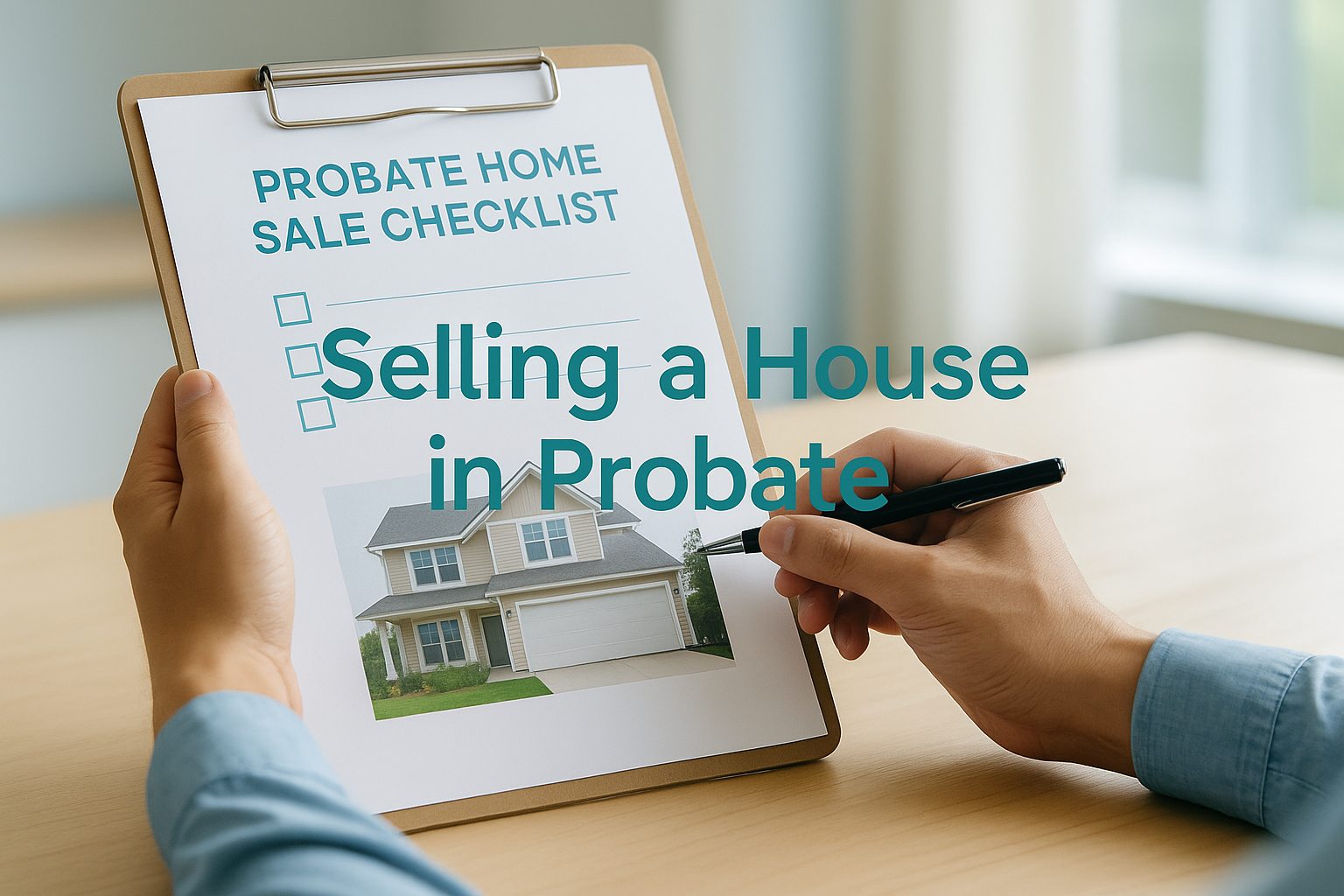
Selling a House in Probate: Step-by-Step Guide
A practical, non-legal walkthrough for executors, administrators, and families who need to sell a property during probate.
- Who: Executor/Administrator (court-appointed)
- Goal: Preserve estate value & comply with court rules
- Timeline: ~60–180+ days (varies by state & court)
- Key Docs: Letters (Testamentary/Administration), death certificate, listing agreement, purchase contract
Overview
Selling a home in probate adds court and fiduciary requirements to a traditional sale. Your job is to maximize value for heirs while following the court’s process. Below, you’ll find a clear sequence of steps, common options, timelines, and tips to avoid delays.
How to Sell a House in Probate (The Practical Sequence)
-
1) Confirm Authority
Obtain court appointment as Executor (with a Will) or Administrator (without a Will). Get your Letters (Testamentary/Administration). Many title companies will require a certified copy.
-
2) Secure & Evaluate the Property
Rekey locks, verify insurance coverage, stabilize utilities, and document condition. Consider a pre-listing inspection to estimate repairs vs. “as-is.”
-
3) Choose the Sale Strategy
- Traditional MLS Listing: Maximizes exposure and price; longest timeline but largest buyer pool.
- Investor/As-Is Cash: Faster timeline; may trade price for speed/certainty.
- Estate Clean-up + Light Make-Ready: Often a sweet spot—modest prep for better offers without heavy renovations.
-
4) Price & Disclosures for Probate
Base pricing on recent comparable sales, condition, and court requirements. Some states limit repairs and require specific probate disclosures or overbid rules.
-
5) List, Market, and Show
Market clearly as a probate sale. Highlight timeline expectations, “as-is” terms if applicable, and any court confirmation requirements. Keep showing access simple but secure.
-
6) Review Offers (Fiduciary Duty)
Evaluate net proceeds, contingencies, and buyer strength—not just price. Keep a paper trail: your duty is to act in the best interest of the estate and heirs.
-
7) Court Confirmation / Overbids (if required)
In some jurisdictions, the accepted offer proceeds to a court hearing where others may overbid. Coordinate with counsel and communicate dates to all parties.
-
8) Escrow & Title
Open escrow, provide Letters and any court orders, clear liens, complete required disclosures. Confirm who signs, how funds are disbursed, and whether bonds are required.
-
9) Close & Distribute
Upon closing, proceeds go to the estate. Keep organized records for the final accounting to the court and heirs.
Typical Timeline
Note: Every state/court varies; attorney guidance controls.
Sale Options Compared
MLS Listing
- Highest exposure & price potential
- Requires showings & time
- Best for typical condition homes
As-Is Cash
- Fastest timeline
- Lower net proceeds likely
- Good for heavy-repair properties
Light Make-Ready
- Declutter, clean, minor fixes
- Balanced speed vs. price
- Often strongest ROI for estates
Common Costs to Anticipate
- Estate attorney fees and potential court costs
- Brokerage commissions & customary seller fees
- Liens, taxes, HOA dues, utilities, insurance
- Clean-out or light repairs (if chosen)
FAQs: Selling a Probate House
Can I sell the house before probate is complete?
Usually, you need court authority (Letters) before signing a listing or purchase agreement. Some states allow early steps; always ask your attorney.
Do I have to sell “as-is”?
No. Many estates sell “as-is,” but you may complete light prep for better offers. Confirm with counsel and the court if approvals are needed.
What is a court-confirmed sale?
In certain jurisdictions, the accepted offer proceeds to a hearing where the judge confirms the sale and allows qualified overbids.
How long does it take?
Commonly 2–6 months, but court calendars, buyer financing, and property condition can lengthen timelines.
Who signs closing documents?
The court-appointed personal representative (Executor/Administrator) signs, consistent with the Letters and any court orders.
Want a Clear Plan for Your Probate Sale?
Get a no-pressure, step-by-step sale plan tailored to your court process, property condition, and timeline.
We are not attorneys and do not provide legal advice.